Japan Spouse Visa From Overseas | Relocation Legal Guide
Moving to Japan With a Foreign Spouse: Immigration Strategies for Japanese Couples Living Overseas
Spouse Visa Applications, Certificates of Eligibility, and Financial Documentation for Couples Relocating to Japan From Abroad
Japan Immigration Law Review | October 2026
For Japanese nationals living overseas with foreign spouses, relocating to Japan involves immigration considerations that differ substantially from those facing couples already residing in the country.
A Japanese professional returning home after an international assignment, a binational couple planning retirement in Japan, or a family relocating to care for elderly parents may share the same objective: establishing a permanent home in Japan.
Yet these applicants frequently encounter a procedural complication. Neither spouse currently resides in Japan, and the documents ordinarily required for a spouse visa application may not be available.
In such circumstances, the critical issue is not simply whether the marriage is legally valid. It is how the couple can establish an appropriate application arrangement, demonstrate financial stability, and document a genuine intention to reside together in Japan.
This article examines the principal immigration strategies available to Japanese–foreign married couples returning from overseas, with particular attention to Certificates of Eligibility, Japan-based family representatives, and financial evidence.
1. Can a Japanese Citizen Sponsor a Foreign Spouse While Both Live Abroad?
Yes. A Japanese national and a foreign spouse may arrange immigration procedures for their relocation to Japan even if both are currently living overseas.
The relevant Japanese residence status is Spouse or Child of Japanese National (日本人の配偶者等), commonly referred to as the Japanese spouse visa.
This status generally permits the foreign spouse to live and work in Japan without restrictions on employment activities.
However, the couple must demonstrate that their marriage is legally recognized, that they intend to establish a genuine marital household in Japan, and that their anticipated living arrangements are sufficiently supported by the submitted evidence.
In practice, the absence of a Japan-based household can complicate the application.
For example, a Japanese citizen who has lived in New York or London for fifteen years may have no recent Japanese municipal tax certificates, employment records, or registered residential address.
Although these circumstances do not automatically prevent approval, they require careful preparation.
The Immigration Services Agency assesses applications based on their individual facts and supporting documentation.
2. Three Immigration Routes for Couples Returning to Japan
Where neither spouse resides in Japan, the appropriate immigration procedure largely depends on whether the Japanese spouse can return first and whether reliable family assistance is available in Japan.
Route A: Both Spouses Travel to Japan Together
Some couples consider entering Japan together, with the foreign spouse initially arriving under Temporary Visitor status or an applicable visa exemption.
They may then seek to complete marriage-related formalities, establish their household, and request a change to Spouse or Child of Japanese National status.
However, this approach involves material immigration risk.
Under Japanese immigration law, changing from Temporary Visitor status to a long-term residence status is subject to restrictions and generally requires special circumstances.
A legally valid marriage alone does not guarantee approval of such a change.
Accordingly, couples should not presume that entering Japan as visitors will allow the foreign spouse to remain indefinitely while a spouse visa application is processed.
Where possible, the Certificate of Eligibility procedure should be evaluated before international travel arrangements are finalized.
Route B: The Japanese Spouse Returns to Japan First
A more conventional strategy is for the Japanese spouse to return to Japan ahead of the foreign spouse.
After returning, the Japanese spouse can make the necessary residential arrangements, complete applicable municipal registration procedures, and prepare an application for a Certificate of Eligibility (COE).
The COE is issued by Japanese immigration authorities to confirm that the applicant’s intended activities meet the relevant requirements for the proposed residence status.
After the COE is issued, the foreign spouse can generally apply for the appropriate visa at a Japanese embassy or consulate overseas.
This route is particularly suitable where the Japanese spouse can arrange accommodation, obtain employment, or otherwise establish a credible basis for the couple’s future livelihood.
Route C: A Qualifying Relative in Japan Assists With the COE Application
Where both spouses must remain overseas until the relocation, assistance from a qualifying relative living in Japan may be an alternative.
Depending on the applicable rules, a Japan-based relative may be eligible to act as the applicant’s representative for the COE procedure.
This can allow the couple to prepare the application while continuing to live abroad.
However, a relative’s participation must be genuine and properly documented.
The representative may need to help obtain Japanese certificates, coordinate the submission of documents, and communicate with professionals handling the application.
Where a relative also agrees to serve as a guarantor or provide financial support, additional evidence regarding that person’s circumstances may be necessary.
The important distinction is that a qualified relative serving as an application representative is not automatically the same person as the financial supporter or guarantor. These responsibilities should be separately examined.
3. Who Can Act as an Application Representative in Japan?
Japanese immigration regulations permit specified persons to represent applicants in Certificate of Eligibility proceedings.
For applications involving the spouse of a Japanese national, eligibility may extend to a qualifying spouse or certain relatives residing in Japan.
The relevant family relationships include specified blood relatives within the sixth degree and relatives by marriage within the third degree, subject to the applicable procedural conditions.
In practical terms, parents or siblings living in Japan may be suitable candidates, depending on the individual circumstances.
Nevertheless, having a relative in Japan does not necessarily resolve every documentary issue.
The relative must be willing and able to perform the necessary responsibilities.
For elderly parents or family members unfamiliar with immigration procedures, this may present practical difficulties.
A registered Japanese administrative scrivener authorized to handle immigration submissions can assist with document preparation and filing within the legally permitted scope.
4. The Financial Evidence Problem: When Neither Spouse Has Japanese Tax Records
One of the most common obstacles for internationally mobile couples is the absence of Japanese income and tax documentation.
Applicants already residing in Japan can often provide municipal residence tax certificates and taxation records to demonstrate their financial circumstances.
By contrast, Japanese nationals who have lived abroad for many years may have no recent municipal tax assessments in Japan.
This situation requires an alternative evidentiary approach.
Establishing Financial Stability Through Overseas Income and Assets
Depending on the circumstances, relevant documentation may include:
- Employment contracts and salary statements from overseas employers.
- Foreign income tax returns or official tax assessments.
- Bank statements showing savings and accessible financial resources.
- Investment and retirement account records.
- Employment offers or anticipated employment arrangements in Japan.
- Evidence of financial support from qualifying relatives in Japan.
The purpose is to demonstrate that the couple has a credible financial basis for establishing and maintaining a household after relocation.
Foreign income and assets must be presented in a manner that enables immigration examiners to understand their nature, reliability, and relevance to living expenses in Japan.
This is particularly important where the Japanese spouse will initially be unemployed following an international relocation.
When a Japan-Based Relative Provides Financial Support
Where parents or other relatives intend to support the couple, the immigration authorities may examine the proposed supporter’s financial circumstances.
Relevant evidence may include income, taxation records, and documentation explaining the intended support arrangements.
However, an application should not depend solely on a nominal promise of assistance where the proposed supporter lacks the resources or willingness to provide it.
The financial evidence should correspond to the family’s actual plans.
Retirement Cases Require a Different Financial Presentation
For older couples intending to retire in Japan, an employment-based assessment may not reflect their financial position.
A couple may possess substantial retirement savings, investment assets, or pension income despite having no intention of obtaining employment after relocation.
In such cases, a well-organized explanation of long-term financial resources may be especially important.
For further discussion, see our Japanese-language guide to retiring in Japan with a foreign spouse.
5. Why Immigration Authorities Examine the Couple’s Intention to Live in Japan
The spouse residence status is intended for foreign nationals who will reside in Japan on the basis of a qualifying marital relationship.
It is not ordinarily designed to function as a precautionary immigration authorization for couples who intend to continue living abroad.
For example, a couple residing permanently in another country might consider obtaining Japanese residence status solely as a contingency against political instability or unexpected circumstances.
Without a genuine plan to establish residence in Japan, such an application may fail to demonstrate the intended purpose of the status.
Evidence supporting a relocation plan may include anticipated housing arrangements, employment plans, family responsibilities, and a realistic timetable for moving.
Where relocation is motivated by the need to care for elderly parents, documentation explaining those family circumstances may also be relevant.
The assessment is necessarily fact-specific.
6. Legal Marriage, Nationality and Prior Immigration History
Before proceeding, couples should examine several foundational matters.
First, the Japanese spouse must hold Japanese nationality for an application based on marriage to a Japanese national.
This issue can be particularly relevant to individuals who have acquired another nationality while residing overseas.
Second, the marriage must be legally recognized under the applicable legal framework.
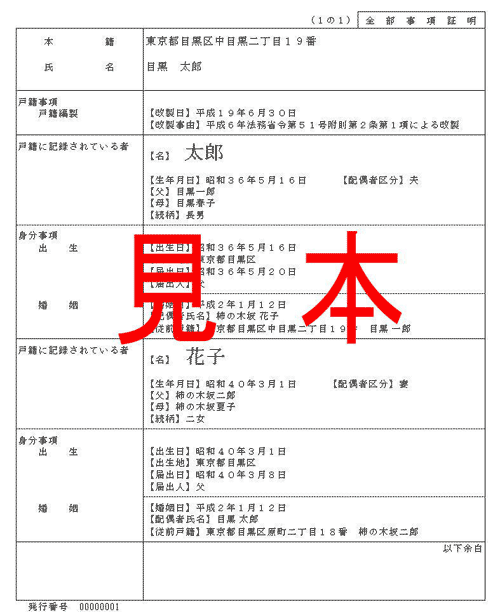
Where the marriage occurred abroad, the couple should confirm whether the relevant notification and registration procedures have been completed and whether the marriage is properly reflected in Japanese family registration records.
Third, immigration authorities may examine the history and substance of the marital relationship.
Supporting documentation can include marriage records, evidence of shared residence, and information concerning the couple’s family life.
The foreign spouse’s previous immigration history in Japan, including any periods of residence or relevant compliance issues, may also influence the examination.
7. Practical Checklist Before Starting a Spouse Visa Application
Couples planning to move from overseas to Japan should clarify the following matters before selecting an application route.
- Japanese nationality: Does the Japanese spouse currently retain Japanese citizenship?
- Marriage registration: Is the marriage properly recognized and documented under the relevant Japanese and foreign procedures?
- Accommodation: Has the couple identified a residential address or temporary family accommodation in Japan?
- Japan-based assistance: Can a qualifying relative assist with the COE procedure, or can the Japanese spouse return first?
- Financial arrangements: What income, savings, pensions, employment prospects, or family support will finance the couple’s life in Japan?
- Immigration history: Does the foreign spouse have any previous residence or immigration history requiring explanation?
- Relocation timing: Is the couple’s proposed move sufficiently definite to support a genuine residence application?
These considerations help determine which documents will be most relevant and whether additional explanatory statements should accompany the application.
8. Frequently Asked Questions
Can we apply for a Japanese spouse visa while living in the United States or another country?
Yes. A couple living overseas may prepare a spouse visa application using the appropriate Japanese immigration procedure, often involving a Certificate of Eligibility and a qualifying representative in Japan.
Must the Japanese spouse return to Japan before applying?
Not necessarily. A qualified relative living in Japan may be able to assist with the COE procedure. However, the appropriate representative arrangements must be confirmed for the particular application.
Can my foreign spouse obtain a Japanese spouse visa without a Japanese employment contract?
A Japanese employment contract is not universally required. The applicant must nevertheless provide credible evidence of how the couple will support themselves in Japan.
Can we use foreign bank accounts and overseas income as financial evidence?
Such documents may help establish financial resources, particularly where the couple has been living abroad and lacks Japanese municipal tax records. Their evidentiary value depends on the individual circumstances.
Can we obtain a spouse visa without intending to live in Japan?
Ordinarily, the applicant must demonstrate an intention to reside in Japan under the relevant marital residence status. Obtaining the status solely as a precaution while continuing to live abroad may not satisfy the intended purpose.
Can a foreign spouse enter Japan as a tourist and then change to a spouse visa?
A change from Temporary Visitor status is restricted and generally requires special circumstances. It should not be treated as a guaranteed or routine alternative to the COE process.
9. Continental Immigration’s Cross-Border Spouse Visa Services
Continental Immigration Administrative Scrivener Corporation assists Japanese nationals and their foreign spouses with immigration procedures for relocating to Japan from overseas.
Our practice regularly addresses matters involving internationally mobile families, expatriate professionals, overseas retirement arrangements, and Japanese nationals returning after extended residence abroad.
We provide consultations remotely, allowing couples to evaluate their eligibility and application options before traveling to Japan.
Our services may include:
- Comprehensive advice regarding Spouse or Child of Japanese National status.
- Assessment of the appropriate application procedure and Japan-based representative arrangements.
- Selection and organization of supporting evidence.
- Preparation of application forms and explanatory statements.
- Review and preparation of relevant supporting agreements and documents.
- Japanese translation of qualifying English, Chinese, and Korean documents within the agreed service scope.
- Submission of immigration applications in Japan through authorized procedures.
- Responses to immigration requests for supplementary documentation or clarification.
- Receipt and communication of immigration examination results.
- Preparation of household cash-flow projections and financial opinions signed by a Certified Financial Planner (CFP), where necessary.
Our financial advisory perspective can be particularly valuable where applicants have substantial overseas income or assets but limited Japanese tax documentation.
Professional Fees
Our basic professional fee starts at JPY 150,000, excluding consumption tax, with additional charges depending on the complexity of the matter.
Actual expenses, international courier costs, and translation work beyond the included scope may be charged separately.
Any refund guarantee is subject to the firm’s applicable engagement terms and eligibility conditions.
For details concerning our services and fees, please refer to our spouse visa service information.
Planning Your Return to Japan
International relocation requires the coordination of immigration procedures, family circumstances, financial documentation, and practical living arrangements.
Couples do not necessarily need to have finalized every aspect of their relocation before seeking professional advice.
An initial online consultation can help determine whether the proposed move is legally and practically feasible, identify potential documentary difficulties, and establish the most appropriate next steps.
Continental Immigration Administrative Scrivener Corporation
Japanese Immigration and Cross-Border Family Relocation Services
https://en.continental-immigration.com/
Professional
 Masakazu Murai
18 years’ experience in Investment Banking at Mitsubishi UFJ Morgan Stanley (JV, MUFG Bank and Morgan Stanley). He had provided financial advisory more than 500 entrepreneurs and senior management.
During his tenure, he worked as an employee union executive committee member in promoting diversity, including the active participation of foreigners and women in the office, and engaged in activities to improve the working environment. He specializes in financial consulting and VISA/PR consulting.
Gyoseishoshi Immigration Lawyer
CMA(Japanese financial analyst license)
CFP (Certified Financial Planner)
Master of Business Administration in Entrepreneurship
Legal note: This article provides general information concerning Japanese immigration procedures as of October 2026. Eligibility, documentation, and the availability of particular application procedures depend on the individual facts and applicable immigration rules. Immigration approval cannot be guaranteed.